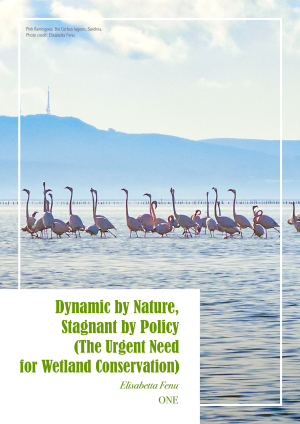
 “Stagnant water rots,” goes a Korean proverb; what doesn’t move withers eventually. Although wetlands are commonly associated with stagnant water, the truth is quite the opposite. Wetlands exist because of dynamism and interconnection with surrounding ecosystems. To sustain the system, water must flow and exchange in some way.
The first human settlements flourished along the banks of rivers. Just think of the Nile, which was essential to the rise of Egyptian civilisation. What makes those areas special is the constant interplay between land and water, where ecosystems meet to create a unique habitat.
They don’t just form in proximity to rivers; wetlands can develop wherever water accumulates on the land, depending on local hydrology, topography, and climate.
Dynamic by Nature
Wetlands are defined by the Ramsar Convention as “areas of marsh, fen, peatland or water, whether natural or artificial, permanent or temporary, with water that is static or flowing, fresh, brackish or salt, including areas of marine water the depth of which at low tide does not exceed six metres.”
They are also described as ecotones, areas of transition between dry land and water bodies. They can include coastal lagoons, tidal marshes, river deltas, lakes, rivers and streams. Swamps, dominated by woody vegetation, and marshes, dominated by herbaceous plants, are among the best-known.
Although they cover a small percentage of Earth’s land surface, 40% of all plant and animal species live or breed in wetlands. They are “cradles of biological diversity”, supporting high concentrations of birds, mammals, reptiles, amphibians, fish and invertebrate species. What sets wetlands apart from other environments is the distinctive geochemical processes that occur under anoxic conditions. Over time, wetland organisms adapted to low-oxygen conditions, flourishing into a multitude of resilient species.
In some areas, wetlands can accumulate large amounts of partially decayed organic matter or vegetation. These are called peatlands, and they play a major role in the global carbon cycle and climate regulation. Peatland vegetation sequesters carbon dioxide from the atmosphere, converting it into organic matter. This is why peatlands are called carbon sequestrators and carbon sinks: the carbon dioxide remains stored in biomass and soil rather than being released back into the atmosphere through decomposition. Even coastal wetland ecosystems like mangroves, seagrasses and salt marshes are carbon removal powerhouses. This key property draws significant attention to wetlands, as they are expected to play a major role in moderating climate change.
They also act like natural sponges, helping regulate water by reducing the severity of floods by absorbing surplus rainfall. Considering the increasing frequency of extreme weather events, wetlands could function as allies in mitigating disasters.
Moreover, the active biogeochemical cycle in wetlands – the cycling of nutrients such as nitrogen and phosphorus – sustains soil fertility. Floodplains, areas adjacent to rivers that experience periodic or seasonal flooding, are a great example of high-fertility areas. This array of ecosystem services provided the perfect conditions for the establishment of human settlements, offering resources for hunting and fishing. To this day, wetlands are fundamental to fishing and agricultural activities, providing space for eco-tourism and birdwatching. “Wetlands are vital for human survival. They are among the world’s most productive environments,” states the Ramsar Convention website.
Wetlands are also the largest natural source of methane emissions to the atmosphere. It may seem like a controversial statement after learning how wetlands can be powerful carbon sinks, but the very property that allows them to function as such also makes them sources of methane. Organic matter decomposing in anoxic conditions inevitably emits methane, making this an “inherent feature of wetlands.” Notably, methane emissions from natural wetlands do not contribute to anthropogenic climate change.
A study published in Nature Climate Change titled “Recent intensification of wetland methane feedback” strongly suggests that wetlands produce more methane as temperatures rise. Global warming could create a dangerous positive feedback loop that would exponentially increase atmospheric methane emissions. Therefore, it seems that problems arise when wetlands are disturbed by humans. According to the Global Wetland Outlook 2025, “Since 1970, approximately 22% of the global total of wetlands have been lost, with an ongoing annual decline of 0.52%. Degradation now rivals outright loss. Multiple interacting pressures, including agricultural expansion, pollution, infrastructure development, hydrological disruption and the impacts of climate change, are making restoration more complex and urgent”.
Stagnant by Policy
The scientific community has long recognised the importance of wetlands. The first modern multilateral environmental agreement on the conservation and sustainable use of natural resources is in fact entirely dedicated to wetlands: the Convention on Wetlands of International Importance especially as Waterfowl Habitat, also called the Ramsar Convention, was established in 1971.
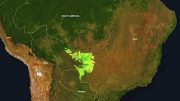
The Convention does not impose strong legal enforcement, and the same can be said for other global conservation obligations. Legal protection is considerably weak across most continents because they lack laws that specifically address this unique ecosystem. In the European Union, the main legal enforcement mechanism that indirectly protects wetlands is the Natura 2000 network, supported by the European Union’s Nature Directives; in the United States, wetland protection is partially addressed by three different acts; in Brazil, specific laws exist, but they don’t consider the hydrosphere to which the habitats are connected. Overall, policy for wetland conservation remains extremely fragmented worldwide.
A new study published in Proceedings of the National Academy of Sciences shows that non-forest ecosystems, including grasslands and wetlands, are being cleared for agriculture and livestock production at nearly four times the rate of forests. Yet regulations do not really consider wetland degradation as an urgent matter, at least not as much as deforestation. Experts are calling for a policy change that addresses all natural ecosystems: if policy protects only one – forests, in this case – it leads to the overexploitation of others, such as grasslands.
So, while scientific literature on the importance of wetlands is robust, wetland preservation is still overlooked in policy, governance, and education; when it’s present, it’s often poorly enforced.
Water Has to Flow, Somehow
It’s human nature that blinds us. We’ve always struggled to hold diversity, even amongst ourselves. We like things to be clearly defined because we need to put them into nice categories to handle them. Wetlands are not like that. They are dynamic “grey areas” whose functioning is supported by hundreds of factors. They are an entity that encompasses many resources and sectors. That explains why policy is so stagnant and inert: we have made the mistake of fragmenting wetlands into many pieces inside a poorly coordinated legal system. Regulatory chaos leads to a lack of community involvement (and viceversa), and nobody is motivated to act on wetland preservation without clear guidelines.
We also like immediate results. The benefits we can gain from wetlands are not immediate; on the contrary, draining them and making profits out of livestock production is. The hunger for quick profit pushes society to see wetlands as something to be exploited, overused, and transformed rather than nurtured and understood. The Ramsar Convention affirms: “People often equate wetlands with wasteland; a place to be drained, filled in, burnt off and re-purposed, and as a result wetlands have severely diminished during the last decades.”
This has to change. Action is urgently needed to protect the remaining wetland ecosystems, and for action to take place, information must flow. Just like water, knowledge stagnates when it doesn’t connect between individuals. Wetland conservation and restoration, to be effective, must heavily rely on public awareness and community involvement. Local communities, stakeholders and indigenous groups need to work in synergy.
Awareness campaigns and public education must treat wetlands as a priority, highlighting the multitude of benefits they provide. The public must know that, to make profits, wetlands do not have to be drained or exploited. The only sustainable way forward is for communities to live and thrive alongside wetlands, harnessing their benefits while protecting the habitat. We cannot brush this off any longer. Flags, borders, nations and cultures don’t matter. Decision-makers, scientists, researchers and citizens must advocate for wetland conservation wherever they are in the world. If managed well, wetlands become precious, necessary tools; if ignored, they can become powerful adversaries. “When managed effectively, the remaining 1.4 billion hectares of wetlands deliver ecosystem services worth up to $39 trillion annually — more than any other type of ecosystem. Investing in wetlands is investing in our shared future.” Ramsar’s Global Wetland Outlook 2025 reports. “Conservation and wise use of wetlands are vital for human livelihoods. The wide range of ecosystem services wetlands provide means that they lie at the heart of sustainable development. Yet policy and decision-makers often underestimate the value of their benefits to nature and humankind.”
Wetland conservation could offer us an opportunity to cherish our origins and promote a global approach to the fight against climate change. Maybe preserving this multicoloured environment can remind us that climate activism is a group effort, in which cultures are united like never before. We might just find out that, despite our differences, we all depend on the same environment. Surely, successfully coordinating communities all over the world can sound overly ambitious. Yet changing public perception could help counteract our irrational tendency to bite the hand that feeds us. Like a river flowing back to the sea, there are many paths that we can take to save the treasures that surround us. Only one thing is certain: each one of those paths involves wetlands, and we can’t remain still.
Elisabetta Fenu
-

By: ONE Team
ONE is a nonprofit magazine founded in 2014, dedicated to providing unbiased and independent commentary and reporting on energy and environment issues. ONE policy pursues the following principles: accuracy, integrity and transparency.
Only Natural Energy provides original articles and also a selection of other sources most explanatory posts about climate change, new technologies, policies and strategies in the energy field. -