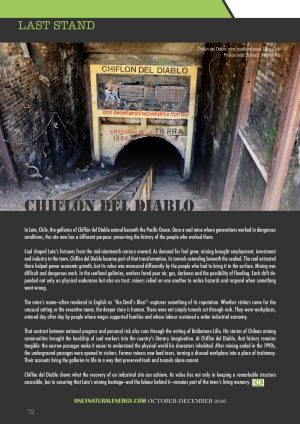
 In Lota, Chile, the galleries of Chiflón del Diablo extend beneath the Pacific Ocean. Once a coal mine where generations worked in dangerous conditions, the site now has a different purpose: preserving the history of the people who worked there.
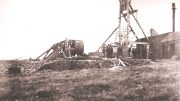
Coal shaped Lota’s fortunes from the mid-nineteenth century onward. As demand for fuel grew, mining brought employment, investment and industry to the town. Chiflón del Diablo became part of that transformation, its tunnels extending beneath the seabed. The coal extracted there helped power economic growth, but its value was measured differently by the people who had to bring it to the surface. Mining was difficult and dangerous work. In the confined galleries, workers faced poor air, gas, darkness and the possibility of flooding. Each shift depended not only on physical endurance but also on trust: miners relied on one another to notice hazards and respond when something went wrong.
The mine’s name—often rendered in English as “the Devil’s Blast”—captures something of its reputation. Whether visitors come for the unusual setting or the evocative name, the deeper story is human. These were not simply tunnels cut through rock. They were workplaces, entered day after day by people whose wages supported families and whose labour sustained a wider industrial economy.
That contrast between national progress and personal risk also runs through the writing of Baldomero Lillo. His stories of Chilean mining communities brought the hardship of coal workers into the country’s literary imagination. At Chiflón del Diablo, that history remains tangible: the narrow passages make it easier to understand the physical world his characters inhabited.
After mining ended in the 1990s, the underground passages were opened to visitors. Former miners now lead tours, turning a disused workplace into a place of testimony. Their accounts bring the galleries to life in a way that preserved tools and tunnels alone cannot.
Chiflón del Diablo shows what the recovery of an industrial site can achieve. Its value lies not only in keeping a remarkable structure accessible, but in ensuring that Lota’s mining heritage—and the labour behind it—remains part of the town’s living memory.
-

By: ONE Editor
Italian professional journalist. ONE Editor in Chief and Sotacarbo Director of Communications and International Relations.
-