 The generation of electricity by nuclear reaction is a good compliment to conventional renewable energy sources.
Nuclear power generation does not depend on whether the sun is shining or the wind is blowing. It provides a stable and reliable base-load quantity of electricity that is constant and reliable. This electricity will supplement other clean sources such as wind and solar.
Electricity from a nuclear reactor is generated by the splitting of uranium 235 (U-235), producing two smaller and lighter elements, neutrons, and a large amount of heat. This heat is used to generate steam, which then spins a turbine connected to a generator. The generator converts the mechanical energy of the spinning turbine into electrical energy.
The byproducts of nuclear fission are primarily high-level waste (spent fuel, radioactive fission products such as cesium-137, strontium-90, and plutonium-239) and low-level waste (up to 90% of the radioactive waste).
There are about 440 nuclear power reactors operating in 31 countries, with a combined capacity of about 400 gigawatt-electric (GWe). In 2024 these provided 2,667 terawatt-hour (TWh), ~9% of the world’s electricity generation capacity.
Currently there are over 75 reactors under construction around the world with another 120 reactors in the planning stages. Asia has the most reactors either under construction or in the planning stages. In the US alone, an additional 35 GWe of new capacity is planned to be in place by 2035 with another 15 GWe added per year through 2040.
According to the US Department of Energy, nuclear energy offers several environmental benefits. Nuclear energy has a low greenhouse gas emission, its carbon footprint is comparable to wind and lower than solar power. Nuclear energy does not emit harmful air pollutants such as nitrogen oxide, sulfur dioxide, particulate matter, or mercury.
Nuclear facilities produce more electricity on less land than any other clean-air source. Uranium fuel is extremely dense which results in far less material needing to be mined and transported when compared to fossil fuels.
Nuclear technology can be used for non-electric environmental benefits, such as water desalination and producing clean heat for industrial processes such as steel and cement manufacturing.
There are concerns with nuclear energy production. Public fears concerning nuclear power generation often rely on what they read or hear from the news media. These reports tend to focus on dramatic failures rather than nuclear’s statistically impressive safety record. This makes nuclear energy appear riskier than the dangers from other electricity generation methods.
These dangers include air pollution, release of mercury (and other heavy metals), climate change, and production of hazardous mining and combustion waste materials.
There have been accidents at nuclear power plants in the past. The three incidents in the last 50 years that are at the top of the publics concerns are the Fukushima nuclear accident in 2011, the Chernobyl disaster in 1986, and the Three Mile Island accident in 1979. The main fears of the general public concerning nuclear power are radiation release, spent nuclear waste disposal, and concerns about human error, negligence, and government cover-ups regarding safety protocols.
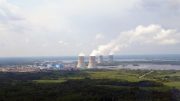
Nuclear waste can be handled and disposed of safely. If we look at France as an example, France is the world’s most nuclear-reliant nation, generating approximately 65-70% of its electricity from 57 operational reactors which are located at 18 commercial power plants.
France maintains a strong nuclear safety record with no catastrophic, large-scale civil accidents. They have operated a high-density, centralized nuclear program since the 1960’s. France primarily manages nuclear waste by recycling spent fuel.
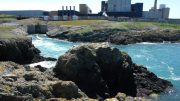
High-level, long-lived waste is reprocessed at the La Hague plant to recover materials which are processed into a new mixed oxide reactor fuel for re-use. The remaining waste is handled based on its radioactivity level. About 96% of its waste is low-level and is stored in surface facilities, while the remaining high-level waste is slated for deep geological disposal.
Small Modular Nuclear Reactors
The future of nuclear power generation is trending towards small modular nuclear reactors (SMRs). SMRs are much cheaper and faster to build than traditional nuclear reactors and can be constructed incrementally to meet a site’s growing energy demand.
According to the International Atomic Energy Agency, SMRs are advanced nuclear fission reactors with a power capacity typically under 300 megawatt-electric (MWe) per reactor, roughly one-third the capacity of traditional reactors.
They feature factory-built modular components for faster construction, lower capital costs, and increased safety. This allows for versatile applications like electricity generation, desalination, and industrial heat.
They are attractive in areas that are not suitable for large nuclear plants such as smaller grids, remote sites, or replacing existing coal-fired plants. SMR’s components are built in factories and transported to sites for assembly, reducing construction time and costs.
Most under design for near-term deployment are light-water reactors (LWR), while others under design are advanced reactors which include fast neutron reactors, high-temperature gas-cooled reactors, and molten salt reactors. SMR’s often utilize passive safety systems that do not require active controls or operator intervention in emergencies. These SMRs often utilize gravity, natural circulation, and convection to cool the reactor core automatically. This is different than traditional nuclear reactors which require active pumps and human action to prevent meltdowns.
SMRs in Deployment
SMR’s already exist. Russia’s Akademik Lomonosov is the world’s first floating nuclear power plant which began commercial operation in May 2020. It produces electricity from two 35 MW(e) SMRs. China’s HTR-PM (High-Temperature Gas-Cooled Reactor-Pebble-bed Module) is the second SMR to enter operation. It is located in Shidaowan, Shandong Province and has been connected to the grid and operational since 2021. It is a high-temperature, gas-cooled pebble-bed reactor with the capacity to produce 210 MW(e). Additional SMRs are under construction or in the licensing stage in Argentina, United States, China, Russia, Canada, France, Japan, South Korea, and the United Kingdom
The Future of SMRs
SMRs face five primary hurdles: high relative costs of first-generation units, regulatory delays, fuel supply bottlenecks, waste management, and financing challenges. The number one hindrance is government policies and administrative red tape.
In the United States, President Trump announced the support the deployment of new nuclear reactor technologies and expansion of the American nuclear energy capacity from around 100 GW today to 400 GW by 2050.
In December 2025, the Department of Energy selected the Tennessee Valley Authority and Holtec Government Services to support early deployments of advanced light-water SMRs in the United States.
The United States is also collaborating with other countries to advance SMR technology. In March 2026, the U.S. Department of Commerce announced a $40 billion energy partnership with Japan to deploy GE Vernova Hitachi (GVH) BWRX-300 SMRs in Tennessee and Alabama as part of the U.S.-Japan Strategic Investment initiative.
In Europe, in March 2026 The European Commission adopted its official SMR strategy to streamline fragmented national licensing rules and accelerate the transition from one-off projects to standardized, factory-built reactors. The leaders in SMR development are in the United Kingdom (Rolls-Royce’s SMR factory-built to generate 300 MW to 470 MW), the Czech Republic (a strategic partnership with Rolls-Royce SMR in 2026 to deploy up to 3 GW, and France (Nuward SMR, a joint venture by EDF and others).
The Department of the Army announced on August 26, 2026 that the Janus Program has selected five nuclear energy vendors, for the construction of five SMRs at five US Army bases. Army is awarding up to a combined $2.2 billion US to own, construct, and operate the SMRs. This program is projected to strengthen the Army’s ability to generate power globally. In addition, it is hoped that it will help support the revitalization of the US industrial capacity and technological leadership.
Conclusion
SMRs can be an important part in the global clean energy portfolio. Issues need to be addressed relating to supply chain infrastructure, financing (both public and private), government regulations, and public perception of SMRs safety.
Achieving solutions to these issues will take time. The first steps can be Government supported installation and operation of the first generation SMRs and an international engagement of the public through the media and town-hall meetings to discuss their concerns and present non-biased scientific information in layman’s terms.
Charles E. Taylor
-
By: ONE Team
ONE is a nonprofit magazine founded in 2014, dedicated to providing unbiased and independent commentary and reporting on energy and environment issues. ONE policy pursues the following principles: accuracy, integrity and transparency.
Only Natural Energy provides original articles and also a selection of other sources most explanatory posts about climate change, new technologies, policies and strategies in the energy field. -