
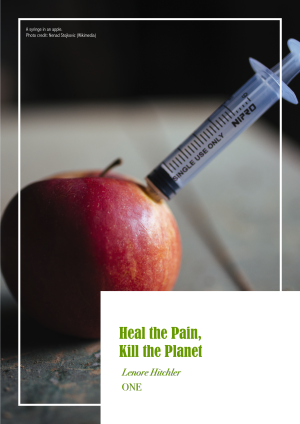
 Various illnesses and other health dysfunctions are costly personally and ecologically. Health disorders cause discomfort, pain, suffering, and can lead to expensive medical bills. Ecologically, treating disease and other health disorders uses a vast amount of both natural resources and energy, and contributes to global warming.
An article in Harvard Medicine stated that the global health care sector generates between 4.4% and 5.2% of global greenhouse gas emissions.
Besides greenhouse gas pollution, the health sector produces excessive amounts of garbage. For example, an article in Healthcare estimated that approximately 5.9 million tonnes of healthcare waste are generated worldwide every year. Of that amount, another article in Healthcare estimated that 15% is hazardous.
Thus, the health of the planet is damaged by the very sector responsible for treating people’s health issues.
Therefore, it is necessary to treat disease in a less toxic way, use less resources and energy, and generate less pollution. Converging with the necessity of changing medical treatments is recent research showing that many different health conditions are associated with our microbiome. Fortunately, these dysfunctions can be treated with environmentally friendly methods, such as diet and lifestyle changes.
The microbiome consists of bacteria, viruses, fungi, archaea, and protozoa that reside on the inside or outside of our bodies. The microbiome protects against pathogens, aids our digestion and helps our immune system develop. The microbiome is related to many different types of disorders.
Excessive inflammation might be the common denominator. The National Institutes of Health (NIH) stated that inflammation is caused by the immune system’s response to an irritant. Excessive inflammation caused by dysbiosis seems to be involved in chronic diseases. Dysbiosis refers to the imbalance of microbes in the microbiome.
Microbes can also cause communicable diseases which can be debilitating and even result in death. The bubonic plague, tuberculosis, malaria, and COVID are just a few examples from throughout history of microbes that have caused dreadful afflictions to humanity. In other words, even though the microbiome in general keeps people healthy, some microbes are definitely toxic to people’s health.
Also, there are limitations in discussing the relationship between the microbiome and health disorders. Even though abnormalities in the microbiome are correlated with many dysfunctions, it has not yet been thoroughly proven that the microbiome causes these malfunctions.
Also, dysbiosis can contribute to some cases of a particular disorder, but not every case of that specific disorder. Additionally, an article of this length cannot provide a thorough examination of the subject. It can only provide a brief introduction. Also, while it would be understandable to attempt to fix one’s microbiome by relying on probiotics, etc., doctors’ prescriptions and protocols should be followed.
The most obvious disease related to the gut microbiome is Irritable Bowel Syndrome (IBS). Many gastroenterologists find that IBS is caused by an imbalanced gut microbiome. An article in Frontiers in Immunology stated that “Many studies show that IBS patients often exhibit dysbiosis.” An article in the International Journal of Molecular Science further reported that “Specific bacterial populations are implicated in IBS, including reductions in beneficial species such as Lactobacillus and Bifidobacterium, along with increases in potentially harmful bacteria such as Firmicutes and Proteobacteria.” Millions of people suffer from IBS, and it is very costly. According to the International Foundation for Gastrointestinal Disorders, IBS affects between 25 and 45 million people in the US. Also, the American College of Gastroenterology reported that the annual cost of IBS is estimated to be from $1.5 billion to $10 billion.
The gut microbiome also has a correlation with osteoporosis, which is a bone disease. Osteoporosis is characterized by low bone mass, resulting in fragile bones that are vulnerable to fractures. According to an article in Frontiers in Cellular and Infection Microbiology, “Significant changes in the structure of the gut microbiome were found in patients with primary osteoporosis.” An article in Frontiers in Immunology further discussed the relationship between the microbiome and osteoporosis. The authors stated, “microbial dysbiosis disrupts skeletal homeostasis. … Pathogenic bacteria and associated metabolites demonstrate elevated levels in osteoporotic patients. … Probiotic interventions prevent osteoporotic progression through microbiota homeostasis restoration.” The authors also stated that worldwide there are 100 million cases of osteoporosis every year. According to the Bone Health & Osteoporosis Foundation, 54 million Americans, half of all adults aged 50 or older, are at risk of breaking a bone, and osteoporosis-related broken bones cost $19 billion yearly.
Fortunately, probiotics may help prevent broken bones due to osteoporosis. An article in the Journal of Internal Medicine reported that in a “randomized, placebo-controlled, double-blind clinical trial, supplementation with L. reuteri 6475 for 12 months resulted in reduced bone loss in older women with low bone density.” Probiotics may work in several ways to strengthen bones. According to an article in Aging and Disease, “in the intestinal tract, elevated concentrations of lactobacillus and bifidobacteria can promote the absorption of minerals such as calcium, magnesium and phosphorus, and thus increase bone mineral density. … Intestinal microbes play a vital role in the synthesis of Vitamin B and K [which] are essential for bone health. … Studies have found that microbial fermentation of dietary fibers produces short-chain fatty acids that are regulators of osteocyte metabolism and bone mass.”
There is also a relationship between asthma and the gut microbiome. Asthma is a chronic condition in which the patient’s airways are inflamed, thus causing difficulty in breathing. The NIH reported that asthma affects more than 24 million Americans. Researchers have recently found a relationship between dysbiosis and asthma. For instance, an article in Nutrients reported that “Different factors are associated with early microbial dysbiosis, such as caesarean delivery, artificial lactation [bottle feeding] and antibiotic therapy among others. Longitudinal cohort studies on gut and airway microbiome in children have found an association between microbial dysbiosis and asthma at later ages of life.”
There is also a correlation between atopic dermatitis and dysbiosis. Atopic dermatitis (AD) is a chronic inflammatory skin disease. The National Eczema Association estimated that in the US 16.5 million adults and 9.6 million children under the age of 18 have AD. The World Health Organization estimated that globally at least 230 million have AD. According to an article in the Journal of Clinical Medicine, “There is substantial data that AD patients have a disturbed microbial composition and lack microbial diversity in their skin and gut compared to controls.”
The microbiome may also be linked to dandruff, an irritating scalp condition impacting 30–50% of the global population. According to an article in Microorganisms, “A clinical study on probiotics consumption (Lactobacillus paracasei strain) found significant improvements in severity and symptoms of moderate to severe dandruff compared to a placebo treatment.”
There is also a relationship between the microbiome and autoimmune diseases. According to an article in the Journal of Immunology, “Gut microbiota dysbiosis plays a role in autoimmune disease pathogenesis. … The gut microbiota maintains the homeostasis of our immune system.” Rheumatoid arthritis (RA) is one of the autoimmune diseases included in the article. The authors reported that “Studies of the gut microbiota have shown that RA is characterized by an increase and/or decrease in the abundance of microbe groups compared with that in healthy individuals.” According to the NIH, arthritis and joint diseases affect approximately 350 million people worldwide and nearly 43 million in the US.
Insomnia may also be related to dysbiosis. According to the Centers for Disease Control and Prevention (CDC), a 2020 study reported that during a one month time period, 14.5% of adults, approximately 40 million, had trouble falling asleep either every night or most nights. An article in PLOS ONE reported that a good microbiome diversity was correlated with sleeping for longer periods of time and less waking up in the middle of the night. An article in Nutrients also reported on the relationship between the microbiome and sleep. The authors reported that a deficiency of gamma-aminobutyric acid (GABA) is correlated with sleep disorders. Lactobacillus and Bifidobacterium produce GABA, and therefore consuming these probiotics may decrease insomnia.
Obesity is another serious health condition correlated with the microbiome. An article in Frontiers in Endocrinology reported “overweight and obese individuals account for about one-third and 10% of the world’s population, respectively. … Evidence is increasing that the gut microbiota contributes to obesity. … “Microbial diversity was significantly decreased and the Firmicutes/Bacteroidetes ratio was significantly increased in obesity.” An article in the World Journal of Gastroenterology reported that “Gut microbiota regulates obesity by regulating energy absorption, central appetite, fat storage, chronic inflammation, and circadian rhythms.” Also, an article in Nutrition Today reported on a study that inoculated germ-free mice with microbiota from obese humans. These mice then accumulated excess body fat.
Diabetes is another major disease associated with dysbiosis. According to the American Diabetes Association, 30.3 million Americans had diabetes in 2015. The World Health Organization stated that over 10% of the world’s population is estimated to either have diabetes or is at high risk for the disease. An article in eBioMedicine reported that research has shown that a diversity of bacterial species in the microbiota is a protective factor against metabolic diseases such as obesity and type 2 diabetes. An article in Scientific Reports reported on various studies about the relationship between gut microbiome diversity and the risk of diabetes. One study that was cited “found that individuals with lower gut microbiome richness in a Danish population were more prone to obesity and insulin resistance.” Another study that was mentioned “found that the gut microbiome diversity in diabetes patients was significantly lower than in non-diabetic groups.”
Anxiety disorders and depression are also correlated with disturbances in the microbiome. The World Health Organization estimated that these disorders affect around 10% of the global population. An article in Clinical Psychology Review stated that evidence is increasing that the gut microbiome is associated with anxiety and depressive disorders. The authors added that the gut microbiota is an important part of the gut-brain axis. Various species of bacteria control the production of serotonin and GABA, and these neurotransmitters play a role in anxiety/depression. Also, these disorders are characterized by higher pro-inflammatory microbiota species, and lower amounts of short-chain fatty acids. An article in Nutrients added that people with anxiety disorders had reduced microbial diversity.
Autism is still another health condition related to the gut microbiome. According to an article in The Lancet, in 2021, around 61.8 million people worldwide were autistic. An article in Nature Communications reported, “longitudinal studies in ASD [autism spectrum disorder] indicate that gut microbial dysbiosis can be found in infancy and persist through adulthood. Early life gut dysbiosis may be associated with compromised barriers within the BGM [brain-gut-microbiome] system, contributing to the development of neuro-developmental disorders.” According to an article in Translational Psychiatry, researchers conducted fecal microbiota transplantation in children with ASD, altering the gut ecosystem and improving gastrointestinal and autistic symptoms. Their 2-year follow-up study confirmed sustained benefits for both autistic symptoms and gut microbiota stability.”
Alzheimer’s is another major health problem associated with the gut microbiome. According to the Alzheimer’s Disease International (ADI), in 2020, over 55 million worldwide had dementia. The ADI also stated that the annual global cost of dementia is about 1.3 trillion dollars. An article in Alzheimer’s and Dementia stated that “Over the past decades, accumulating evidence suggests that the gut microbiome exerts a key role in Alzheimer’s disease (AD).” The International Review of Neurobiology reported that “Recent studies suggest that the intestinal microbiota is altered in AD patients when compared to healthy individuals.”
A well-functioning gut microbiome may even contribute to a longer life span. For instance, an article in Nature Aging compared 297 centenarians [people who are 100 years or older] with 1,203 controls. The authors reported, “Our results suggest that the gut microbial community in centenarians is associated with longevity and characterized by ‘youth’-associated signatures with high species diversity, a low abundance of potential inflammatory bacteria and a high level of bacteria with beneficia potential in the gut.” An article in Nutrients reported on a study comparing centenarians, nonagenarians [people who are from 90 to 99 years old] and younger controls. The authors reported that the older individuals had a greater diversity of microbes which were “indicative of an adaptable intestinal microbiota, capable of adapting to multiple environmental perturbations. Due to this peculiarity high intestinal microbial diversity has been defined as an indicator of longevity.”
Thus, this article has provided a brief glimpse into some health conditions linked with the microbiome. Millions of people worldwide are afflicted with diseases associated with the microbiome. Also, their illnesses cost billions of dollars. Luckily, there are various ways to improve the microbiome. Probiotics and prebiotics should be gradually introduced into the diet, with an emphasis on increasing fiber intake.
Fortunately, a microbiome oriented lifestyle will also improve the health of the planet. Raising additional organic vegetables and fruit to provide more fiber will produce less pollutants than the chemically oriented pharmaceutical industry. Additionally, recent studies have shown that going outside and being exposed to the microbiome of trees, bushes, and other vegetation increases human microbiome diversity. Also, recent research suggests that being outside in nature increases motivation to support the preservation of nature. This may lead to using fewer natural resources and energy. It is reasonable to assert that the best alternative energy method is not producing it in the first place.
Lenore Hitchler
-

By: ONE Team
ONE is a nonprofit magazine founded in 2014, dedicated to providing unbiased and independent commentary and reporting on energy and environment issues. ONE policy pursues the following principles: accuracy, integrity and transparency.
Only Natural Energy provides original articles and also a selection of other sources most explanatory posts about climate change, new technologies, policies and strategies in the energy field. -