
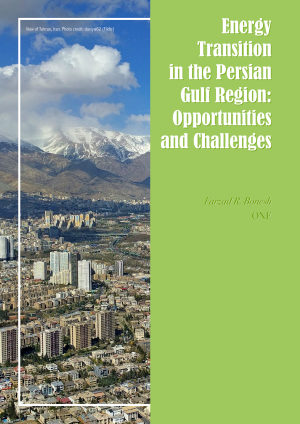
 The countries of the Persian Gulf region, including Iran, Iraq, and the Gulf Cooperation Council countries – Bahrain, Kuwait, Oman, Qatar, Saudi Arabia, and the United Arab Emirates – are slowly moving towards an energy transition despite their abundant oil and gas resources. The Persian Gulf region is a major stakeholder in the global system, with a major portion of its energy needs dependent on oil and gas. Factors such as international pressure for decarbonization, the decline in the costs of new technology, and the economic imperative for diversification are driving them towards renewable energy and better energy security.
Also, the following article examines energy developments until the end of February 2026 and the start of the Iran war. So, what follows is a non-war scenario.
Approaches and programs
Ensuring global energy security, increasing investment in future energy projects, and adopting solutions to reduce greenhouse gas emissions and support the transition to a more efficient energy system are part of the focus of the countries of the region.
Apart from the specific circumstances of Iran, oil and gas revenues sometimes account for more than 60%-80% of the budgets of the Arab governments of the region. Therefore, the transition also affects political and security stability. In the meantime, a “balanced” approach to the energy transition that simultaneously ensures sustainability, energy security, and economic prosperity is envisaged. Countries in the region are considering the transition from one energy system to another, maximizing energy efficiency, reducing greenhouse gas emissions from operations, developing renewable and clean energies, and investing in technologies and decarbonization.
In recent years, increasing energy consumption, severe air pollution, and a significant imbalance between energy production and demand have led the Iranian government to formulate policies for the energy transition, the Sixth Development Plan (increasing renewable energy capacity to 5,000 MW), high-level policy documents, and membership in international agreements.
The National Energy Strategy Document, Iran’s Twenty-Year Vision Document (2005-2025), the general policies of the “Resistance Economy” in the energy sector, the general environmental policies including the initial goals and basic strategies for Iran’s energy sector until 2041, the Law on Reforming the Energy Consumption Pattern, Iran’s Seventh Development Plan (2024-2028), and the National Plan for the Development of Solar Power Generation Systems and Chains are moving in this direction.
Hydrocarbons play a central role in Iraq, so the government is trying to diversify its energy composition. Iraq is increasingly investing in renewable energy solutions, especially solar energy and hydroelectricity, to increase energy security and reduce carbon emissions. Programs such as Saudi Arabia’s Vision 2030, Oman’s Vision 2040, Qatar’s National Vision 2030, the UAE’s Vision 2021 and its related Energy Strategy 2050, Bahrain’s Economic Vision 2030, and Kuwait’s Vision 2035 are important in the energy transition.
Most countries in GCC have set a net-zero emissions target for 2050 or 2060. Kuwait’s Vision 2035 plan also pursues economic reforms, diversification, and increasing the attractiveness of renewable energy, electricity, and water to foreign investors. Fossil fuels account for about 90 percent of total CO2 emissions and nearly a third of methane emissions. The Gulf Persian region is moving away from a one-size-fits-all policy. Supporting low-carbon, low-emission oil and gas industries is therefore part of the policy and approach.
Indigenization
Although efforts to indigenize renewable energy face significant obstacles, at the national level, apart from Iran’s localization efforts, GCC countries are moderating their dependence through targeted policies such as Saudi Arabia’s local content guidelines or Dubai’s efforts to assemble renewable energy products and its regional hub.
In Saudi Arabia, localization efforts under the National Renewable Energy Program (NREP) aim to source 17-18 percent of components domestically. Saudi Arabia is working to mine and develop raw materials for renewable energy – such as silica, lithium, platinum, copper, and bauxite – to tap about 6 percent of global silica reserves and build supply chains.
Indigenization targets may remain elusive. But localization efforts are being pursued to move from being a net importer in the global renewable energy market.
Institutions
Important approaches to energy security, facilitating the transition to decarbonization, building local capabilities, a low-carbon economy, and maintaining a competitive advantage in the global energy market, along with financial incentives and tax breaks for private sector investment, are important in advancing the energy transition in Persian Gulf region.
Sovereign wealth funds and strategic investment companies of countries have played an important role in the energy transition and economic diversification strategies of countries.
Countries in the region can take advantage of energy transition opportunities by leveraging sovereign wealth funds and strategic domestic, regional, and international investments in global mineral, refining, and processing assets. As the vast assets of over US$1 trillion, the Kuwait Investment Authority (KIA) and Kuwait’s foreign policy contribute to energy diplomacy and the development of energy trade.
Renewable Energy Opportunities
Facilities for home solar power, moving towards reducing carbon emissions by 2030, diversifying energy, increasing the share of renewable energy, and achieving carbon neutrality are evident.
Apart from Iran’s efforts to develop civilian nuclear power plants with Russian assistance, the United Arab Emirates aims to reach a nuclear power share and capacity of 5.6 gigawatts by 2050. Saudi Arabia is also pursuing nuclear energy.
Some countries in the region, such as the United Arab Emirates and Qatar, are pursuing large-scale overseas investments, pouring capital into global mining projects and renewable technology production.
The region could add more than 100 gigawatts of renewable capacity by the mid-2030s. Saudi Arabia aims to generate half of its electricity from renewable sources by 2030. The United Arab Emirates aims to increase the share of clean energy in its total mix to 44 percent by 2050.
Increasing the share of renewable energy in Oman’s energy mix to 30 percent by 2030 is strategic and crucial. Qatar is set to have 30 percent of renewable energy in its energy composition by 2030. Bahrain has also increased its target to 20 percent by 2030; Kuwait has set its target at 15 percent by 2030.
The Persian Gulf region as a whole has no geographical or environmental limitations for the construction of solar power plants and is accelerating the transition to renewable energy with solar power plants. These efforts have been well-paced in Iran and the Arab countries of the region.
Iran, with the fourth largest oil reserves and the second largest natural gas reserves in the world, has significant renewable resources, including solar, wind, hydro and geothermal energy, and can meet up to 98% of its electricity demand from these sources.
Iraq is trying to better manage its energy sector. Integrating clean energy technologies and energy diversification into Iraq’s long-term energy strategy aims to prepare for a more diversified energy sector, intending to reduce dependence on fossil fuels. Despite the Iraqi government’s plan to produce 12 gigawatts of solar energy by 2030, the construction of a 2,000-megawatt solar power plant, several infrastructure investments including power plants, and dozens of projects are awaiting approval.
Riyadh’s energy transition strategy includes increasing energy efficiency, changing the energy composition, and managing greenhouse gas emissions, investing in more gas production with the ultimate goal of becoming an LNG exporter, exporting clean hydrogen, and producing 15 percent of the world’s blue hydrogen in the coming years.
Kuwait (KPC) has previously announced plans to invest $110 billion in green hydrogen energy transition projects. Oman has also taken good steps to become one of the world’s largest hydrogen producers by 2030, in line with its Oman Vision 2040. Countries such as Iran and Oman have good potential for developing wind energy. Wind speeds are economical and good in the northeastern and southeastern parts of Iran, Dhofar and Al Wusta provinces Oman, and along the country’s coast. There are also other potentials for biogas power generation and geothermal energy for power generation in the region.
Challenges
Structural variables, geopolitical tensions, border disputes, climate change, international pressures, heavy dependence on oil, government’s vulnerability to oil price fluctuations, slow energy reforms, bureaucracy, high domestic consumption, heavy energy subsidies, etc., challenge the achievement of energy transition goals in the region. Other challenges, in some counties such as a lack of strategic and long-term planning, a lack of broad institutional linkages, and a lack of coherence in policy frameworks, lead to weak policymaking.
In Iran, political, governance, and institutional challenges are the most influential challenges, which are followed by infrastructure, economic, geopolitical, regulatory, market, and environmental challenges.
Strong institutional strategies are crucial to advance the transition to renewable energy. Countries in the region are experiencing their energy transition in an environment of social, cultural, and political challenges. A successful transition, therefore, requires structural changes in values, beliefs, governance systems, and institutions.
Many policymakers still do not see the urgency for structural changes in the energy transition. Some also believe that the change must be in a way that protects the livelihoods and well-being of vulnerable groups. Some also consider the gradual cessation of dependence on hydrocarbons to be detrimental to the interests of countries in the region. Sometimes policymakers do not initiate rapid reforms, such as reducing fossil fuel subsidies.
The energy transition in the region is associated with risks of political instability, security concerns and global geopolitical changes. Oil and gas remain the cornerstone of the region’s economy, and countries in the region often rely on high fossil fuel prices to balance their national budgets for expenditures, subsidies, wages, and construction projects.
Technical and economic challenges, including the high costs of renewable technologies, the intermittent nature of wind and solar energy, persistent fossil fuel subsidies, limited financial resources, and a lack of large-scale investment, are important.
The region’s long-standing dependence on hydrocarbons, fossil fuel subsidies, and low electricity tariffs, weak energy infrastructure and distribution networks, and technical barriers to integrating renewable energy sources, can also slow down the transition process. China’s role in controlling more than 80% of the global solar energy market and more than 60% of wind turbine production, dominating the extraction, refining, and processing of raw materials, and more than 80% of the world’s rare earth elements is strategic.
In the meantime, the supply of vital minerals, research and development, and the expansion of domestic production are essential to create a domestic renewable energy sector. The path to full indigenization remains fraught with major challenges, including advanced technology and a scarce skilled workforce. New energies, especially solar energy, for domestic consumption are rarely used. The lack of additional incentives is effective.
Successive Iraqi governments have pledged to reduce gas flaring, but tangible progress in energy sector reforms has been limited by technical and governance hurdles. Some countries, such as Iran and Iraq, also need to create an investment climate conducive to attracting local and international stakeholders.
Non-War Scenario
Industrial and population growth in the Gulf region, coupled with increasing fossil fuel consumption and environmental threats, exacerbated by climate change, and the growing importance of sustainable development, have made the transition to renewable energy imperative.
Countries in the region often face challenges that prevent full exploitation. But reducing greenhouse gas emissions and increasing the share of renewable energy by 2050 is essential. However, the energy transition in the Persian Gulf is likely to fall short of global requirements to achieve net-zero emissions and limit warming to 1.5°C.
The future of the Persian Gulf’s energy sector is linked to innovation and sustainability, better energy security, attracting foreign direct investment, increasing the share of renewables in the domestic energy composition, and more productive use or export of fossil fuels. Better addressing challenges and exploiting new opportunities, leveraging new technologies, aligning national energy policies with global approaches, and attracting more foreign investment and expertise are likely to pave the way for the energy transition in the region.
If governance structures and state-owned enterprises have greater incentives to prioritize renewable energy development, the the Persian Gulf’s participation in shaping global climate policies and international efforts to promote the energy transition will also increase. Continued technological advances, international partnerships, and political support are expected to drive further progress along the energy transition path in the region.
Countries can still play a more effective and practical role in the global energy transition with national funds and companies, ambitious future energy plans, and a strategic focus on diversity, sustainability, and innovation.
Instability
The energy transition in the region is associated with risks of political instability, security concerns and global geopolitical changes. Now there are political, security and geopolitical challenges in the region that prevent cooperation and full investment. The future of the region’s energy sector is related to political and geopolitical variables, better energy security, and reducing the risk of war and conflict. Undoubtedly, the risk of ongoing wars and conflicts will have multi-dimensional negative effects on the landscape, international partnerships and investment and the path to the new energies in the regions.
However, the conflict Persian Gulf Region, still ongoing at the time of writing, puts it all in doubt.
A short and limited war can have short consequences. But no matter how long the war is regional and extends to the infrastructure, it will have short-term and long-term multi-dimensional consequences.
Farzad R. Bonesh
-
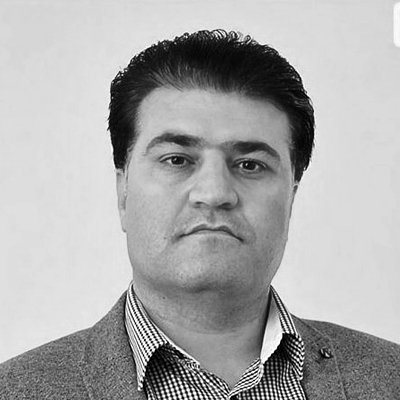
By: Farzad Ramezani Bonesh (ONE Team)
Farzad Ramezani Bonesh is a writer, senior researcher, and analyst focusing on the Middle East and South Asia. He has written research articles, short analyses, and journalistic pieces in both Persian and English. He has also appeared on international outlets such as Al-Jazeera, RT, and Al-Araby among many others.
-