 Kazakhstan, the largest economy in Central Asia, with its economic development plan and strategic document 2050, has actively developed economic and trade diplomacy, diversified foreign policy, and foreign investment.
Kazakhstan’s natural resources are significant, with 43% of the world’s uranium reserves, 3% of the world’s oil reserves, over 2 trillion cubic meters of natural gas reserves, and major coal production.
The role of energy is prominent in Kazakhstan’s pragmatic and multi-vector approach, balancing relations with Russia, China, the European Union, and the United States, and seeking to strengthen its position in Central Asia and advance its long-term interests.
Kazakhstan’s energy diplomacy also seeks to overcome geopolitical constraints by diversifying energy trade, strengthening cooperation, and strengthening its position in global markets and regional cooperation.
Astana attaches great importance to attracting investment in the energy sector and increasing its competitiveness. Therefore, the Eurasian neighbors, along with the European Union and the West, are essential partners for energy-sector cooperation.
In the period from January to September 2025, Kazakhstan’s oil and gas condensate production increased by 113.2% compared to the same period in 2024. The volume of gas transit also increased, and the production of petrochemical products increased by 115.8%.
China’s growing presence in Kazakhstan’s energy sector is evident and goes beyond the traditional extraction of oil and gas resources. a large part of the oil is processed and purchased by China.
The Kazakh government plans to increase its oil refining capacity from about 20 million tons to 39 million tons by 2040.
In recent months, Kazakhstan’s oil and gas projects worth more than $1.5 billion have been considered, including a Urea production project with China National Petroleum Corporation (CNPC) financing for the transportation of ethane and propane with China Development Bank.
Despite the decline in foreign investment in the oil sector, Astana is using the growing presence of Chinese companies as a good alternative to the 10% annual growth in total oil production. Oil production growth has recently reached 2.1 million barrels per day.
Recent agreements at the second China-Central Asia summit on gas supply, petrochemical processing, the presence of China National Offshore Oil Corporation (CNOOC) in the Jului oil and gas project, China National Petroleum Corporation (SINOPEC) in western Kazakhstan, and the presence of China National Petroleum Corporation (CNPC) to explore the Northern-1 gas block are notable.
Astana By participating in projects such as the Baku-Tbilisi-Ceyhan (BTC) pipeline and the Caspian Sea connection and Eurasian energy security, Kazakhstan supplies about 13% of the EU’s oil imports.
Kazakhstan is also an important energy and oil partner of Russia, and exports a significant part of its total oil through Russia.
Natural gas remains a strategic fuel. Natural gas production has also increased to 51.6 billion cubic meters, up almost 17 percent from last year. The government is also expanding gas supplies to various regions.
Kazakhstan, despite intensifying the fight against illegal exports of petroleum products, has announced plans to increase the transit of Russian gas to Uzbekistan to 11 billion cubic meters through Kazakh territory. The country is interested in transitioning Russian gas to China and importing Russian gas to various regions of Kazakhstan.
Astana’s desire to diversify export routes through the Caspian Sea, cooperation with Baku and Ankara, and the construction of the Trans-Caspian pipeline for Kazakh oil and natural gas to Europe remain important. The presence of companies such as ENI, Shell, and Chevron in the energy5 sector of Kazakhstan is also prominent.
About 54% of Kazakhstan’s total electricity mix comes from coal, and almost a third from natural gas, and clean energy accounts for about 15% of electricity generation. From January to September 2025, Kazakhstan generated 89.9 billion kWh of electricity, which is 102.5% more than in the same period of the previous year.
Kazakhstan’s strategy to add 6.7 gigawatts of new electricity capacity by 2029 is pursued from renewables and gas, with phased implementation, a commitment to rapid expansion, and grid stability transition from coal.
Astana also plans to promote regional electricity trade, joint development of hydropower, across Central Asia.
From June 2025, two new mechanisms have been introduced in the Kazakhstan electricity market aimed at modernizing the energy sector and ensuring return on investment.
Astana plans to modernize the energy sectors for the period 2025-2029, with Investments of more than $24 billion have begun to upgrade existing infrastructure and build new power generation, transmission, and water supply systems.
Coal still provides 70 percent of Kazakhstan’s electricity. With proven reserves of 33.6 billion tons of coal, Kazakhstan is modernizing its coal production through clean technologies.
The agreement between QazaqGaz and China’s Shandong Energy Group to build a coal-to-gas plant is also in line with Kazakhstan’s broader strategic goal of diversifying its energy exports.
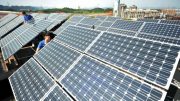
Electricity generation from renewable energy sources reached 6.5 billion kWh, or 111.9 percent compared to the first nine months of 2024.
Kazakhstan plans to increase the share of renewable energy in its energy mix to 50 percent by 2050 and generate 15 percent of its electricity from renewable sources (solar and wind) by 2030. In this area, China, Russia, Arab, European, and Western companies are exploring renewable projects in Kazakhstan.
China agreed last October9 to invest $1 billion in the construction of two renewable energy facilities in Kazakhstan, a 300-megawatt solar power plant in the Turkestan region and a 500-megawatt wind power plant in the Karaganda region.
Kazakhstan has published a draft concept for the development of hydrogen by 2040. Apart from the strategic partnership with the European Union, countries such as Italy, France, and Germany have also increased their engagement with Kazakhstan.
Astana hopes to export hydrogen to Europe by building an offshore hydrogen pipeline from the Caspian Sea.
Kazakhstan has begun construction of its first modern nuclear power plant project in the Almaty region, 10estimated to cost $14-15 billion, with Russia’s Rosatom. China has been selected to lead the construction of the next plants to fill the country’s growing energy deficit.
The country also hopes to expand its uranium exports. Kazakhstan is working on the application of artificial intelligence technologies to expand the production of rare earth metals and uranium in the fuel and energy complex.
Given Kazakhstan discovered lithium reserves ($15.7 billion) and its vast reserves of cobalt, titanium, and other rare earth elements, Astana is looking to expand its role in global production. German and Korean companies are exploring lithium deposits in eastern Kazakhstan.
Outlook
Kazakhstan’s energy deficit is significant, so large investments and careful energy diplomacy by the country are crucial to overcoming infrastructure challenges.
Sanctions against Russia could affect Russian-Kazakh energy cooperation. Lukoil, which was recently sanctioned by the United States, has stakes in Kazakh energy projects.
Half of the country’s energy consumption comes from coal, and the share of renewable energy is very low. But with Kazakhstan supporting more than 70 percent of the construction of nuclear power plants, Astana has a smoother path ahead.
Kazakhstan should continue to strengthen the country’s economic resilience and competitiveness, integrate modern technologies, and transition to energy for sustainable development.
Suppose the possibility of constructing pipelines in the Caspian Sea becomes feasible. In that case, the Caspian Green Energy Corridor initiative of April 2025 is a major decision to transfer “green hydrogen” and renewable energy from Central Asia to Europe through the Caspian Sea.
To advance energy security, sustainable development, and consolidate Kazakhstan’s position as a major energy hub in the region, Astana should continue to engage with various actors.
It should also pursue strengthening energy security, modernizing infrastructure, expanding capacities, and introducing new, traditional, and renewable energy digital solutions.
Kazakhstan is likely to achieve carbon neutrality by 2060 through modernizing energy legislation and reducing tariffs on wind and solar energy by 2050.
There is also the potential for Kazakhstan to evolve from an exporter of energy raw materials to a key player in the transition to a future of electric vehicles and energy storage in the region.
Farzad Ramezani Bonesh
-
By: Farzad Ramezani Bonesh (ONE Team)
Farzad Ramezani Bonesh is a writer, senior researcher, and analyst focusing on the Middle East and South Asia. He has written research articles, short analyses, and journalistic pieces in both Persian and English. He has also appeared on international outlets such as Al-Jazeera, RT, and Al-Araby among many others.
-